
COMMENT OF THE DAY: WHEN ALL WE SEE IS THE VIEW TO A KILL 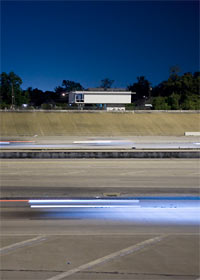 “I like the ‘idea’ of this house, and the view of downtown is very nice. However, what about the well-documented health [effects] of living near (or extremely near, in this case) freeways? Are the increased risk of cancer, heart disease, asthma, premature births and so on a worthwhile trade-off for living in a conceptual design statement? Maybe they have some kind of cool air-pollution filtration system….” [Mies, commenting on Self Directed: A Modern House Angled for 288’s Best Freeway Views]

Sign up for the Newsletter






I’ve heard this before… but am curious as to how close is too close for there to be a health impact? A couple blocks… half a mile?
Studies say that most studies have highly constrained methodology (but I’m not going to bother backing that up with a link or anything, you’re just going to have to take my word for it).
As was the case with epidemiological research along the Ship Channel, I suspect that there are likely more illnesses near infrastructure that is generally perceived to be unpleasant because particular socioeconomic classes of people are relegated to living near them.
Besides… Who cares about deleterious health effects now that we have ObamaCare? GO FREE MEDICINE! Woooooooooo!
1,000 ft from a highway is the best distance to avoid the air quality issues. Air quality around a highway is bad. Within 200 m of a highway, there are high levels of 1,3 butadiene, benzene, ultrafine particulates, black carbon, oxides of nitrogen, and carbon monoxide. Lots of studies have shown correlation between asthma, cario-vascular problems, and lung cancer with living near large highways. This study is a good compliation: http://www.ehjournal.net/content/6/1/23. Children are particularly at risk because of their developing lungs. The tobacco defense (no clear evidence) is always a favorite of industry because they know how hard it is to get quality epidemiological data from a poplulation that may be transient and may have other factors contributing to disease (smoking, lack of excercise, etc.). But, do you really need confirmation that living in a soup of carcinogens is bad for you?
Well, no, I don’t need confirmation of a hypothetical but unproven risk to be concerned about it. That much is true. In an apples-to-apples comparison of a cottage adjacent to a freeway or one that is a quarter mile from the freeway, where they’re both in the same neighborhood, I’ll take the latter.
But throw in an awesome view (and soundproofing), and I’m far more inclined to pay substantially more to take the hypothetical unproven risk.
Thanks for the info “clean air”. I already had Asthma but now live 1584 ft from the freeway… so I wanted to make sure I wasn’t too close :)
There is nothing hypothetical and unproven. There is plenty of proof. The only defense is the tobacco defense: dispute the quantum of proof. The tobacco industry used to say that the cancer claims were hypothetical and unproven and demanded a greater quantum of proof. Millions died of lung cancer and other diseases while we waited for that quantum of proof.
The tobacco defense was logically sound, strictly speaking. That doesn’t mean that a smoker (or a prospective resident of a freeway-adjacent property) should entirely dismiss the potential risks, just that one should avoid taking the summary conclusions of any particular analysis at face value given their individual circumstances; even most researchers will tell you that about their own findings, and disclaimers are often part of the study itself; journalists, lobbyists, and litigators…not so much.
Who cares? Some architects I know would take cancer as a trade off for that kind of PR. The great thing about this story is not the view, but that the Owner CHOSE to live there. Maybe the city or the Feds can tell us all where to live and what kind of dwelling is appropriate for us . “Notice: Failure to use Federally approved light bulbs and toilet paper will result in the seizure and forfeiture of your property.†(and guess who sells the bulbs and paper? Bingo!)
Who held the gun to this guy’s head at closing? Let’s round up the Lawyers (a la tobacco, Big Mac’s etc.) so we can hold others accountable for the consequences of our own behaviors. Yeesh.