THE DEATH, LIFE, AND CONTINUING OBITUARY OF MONTROSE, STILL TEXAS’S ‘COOLEST NEIGHBORHOOD’ 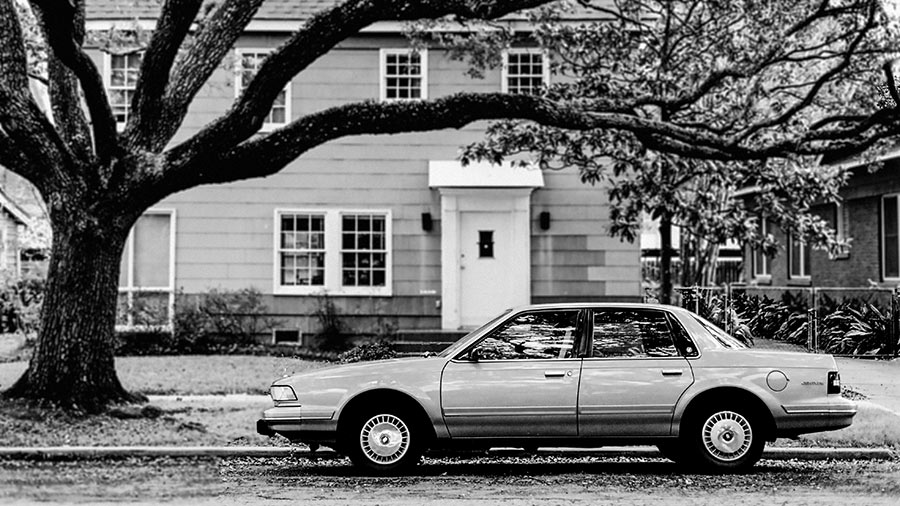 Nostalgia for Montrose’s good old days as a counterculture hub has a history almost as long and involved as the neighborhood itself, curator of Houston lore John Nova Lomax points out in a new essay for Texas Monthly. “I’ve heard generations of these death-by-gentrification declarations. Hippies might tell you it died around the time Space City! went under in 1972,” he writes (Lomax himself was “conceived in Montrose by hippie parents, in a house on the corner of Dunlavy and West Alabama.”) “There have almost always been laments about rising rents: In 1973, Montrose was featured in Texas Monthly’s third-ever issue, with folk singer Don Sanders fretting about a mass exodus of creative types brought on when area leases topped a whopping $100.” Since then, however, the losses have only mounted: “Gentility has encroached on Montrose from the snooty, River Oaks-lite Upper Kirby district to the west, while Midtown’s party-hearty bros have invaded from the east and north. Property taxes and rents have both skyrocketed; despite the oil downturn, it’s almost impossible to find a one-bedroom for less than $800 a month. Having gained more acceptance from society at large, the LGBT community has scattered to neighborhoods like Westbury and Oak Forest. Bohemians have fled to the East End, Acres Homes, and Independence Heights — the gentrified Houston Heights no longer an option — or have left Houston altogether.” [Texas Monthly] Photo of house across from Menil Park, 1999: Alex Steffler, via Swamplot Flickr Pool [license]

Sign up for the Newsletter


Quicklink

COMMENT OF THE DAY: WHAT’S IN STORE FOR HOUSTON’S REMAINING MANSARDS 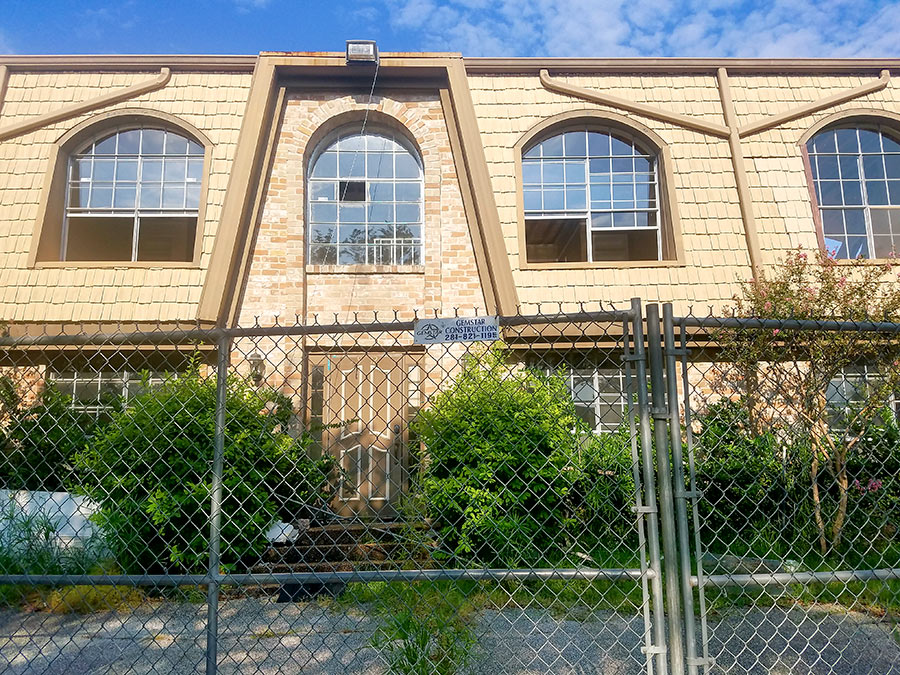 “These clusters of mansard-roofed ’70s apartments and townhouses dot the mid loop area and will be getting dozed by the dozens during these decades for those wanting large wads of land.” [Dana-X, commenting on The Ripple Creek Townhomes Are Now Being Ripped to Shreds] Photo of Ripple Creek Townhomes at 1015 S. Ripple Creek Dr.: Swamplot inbox

COMMENT OF THE DAY: THE DIFFERENCE BETWEEN PUBLIC ART AND LANDSCAPE DECORATION 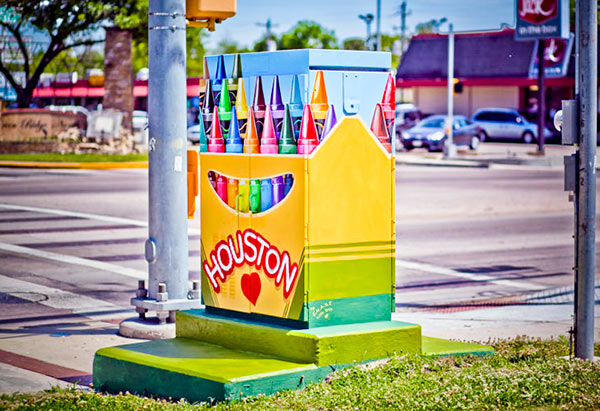 “It is poorly written, but I think I get the point of the Glasstire post. Public art should really be art that is given its own space and not be little more than an attempt to pretty up the existing urban landscape. When you have artists putting decorations on electric boxes, bridges, or other things that are normally not even noticed as part of our urban landscape, you diminish the art and the artist into a municipal decorating service. Public art should be set aside from the urban landscape instead of being relegated to dressing it up.
I generally agree. I do like the paintings on the electric boxes, but these kind of projects seem to be a way of paying lip service to public art.” [Old School, commenting on Tip-Off for Apartments by the Toyota Center; Details of the Coming Canino Farmer’s Market Redo] Photo of mini mural by Anat Ronen at Airline Dr. and Hardwicke: UP Art Studio
“It is poorly written, but I think I get the point of the Glasstire post. Public art should really be art that is given its own space and not be little more than an attempt to pretty up the existing urban landscape. When you have artists putting decorations on electric boxes, bridges, or other things that are normally not even noticed as part of our urban landscape, you diminish the art and the artist into a municipal decorating service. Public art should be set aside from the urban landscape instead of being relegated to dressing it up.
I generally agree. I do like the paintings on the electric boxes, but these kind of projects seem to be a way of paying lip service to public art.” [Old School, commenting on Tip-Off for Apartments by the Toyota Center; Details of the Coming Canino Farmer’s Market Redo] Photo of mini mural by Anat Ronen at Airline Dr. and Hardwicke: UP Art Studio

COMMENT OF THE DAY RUNNER-UP: HOUSTON WOULD HAVE NO PART OF THE CONFEDERACY 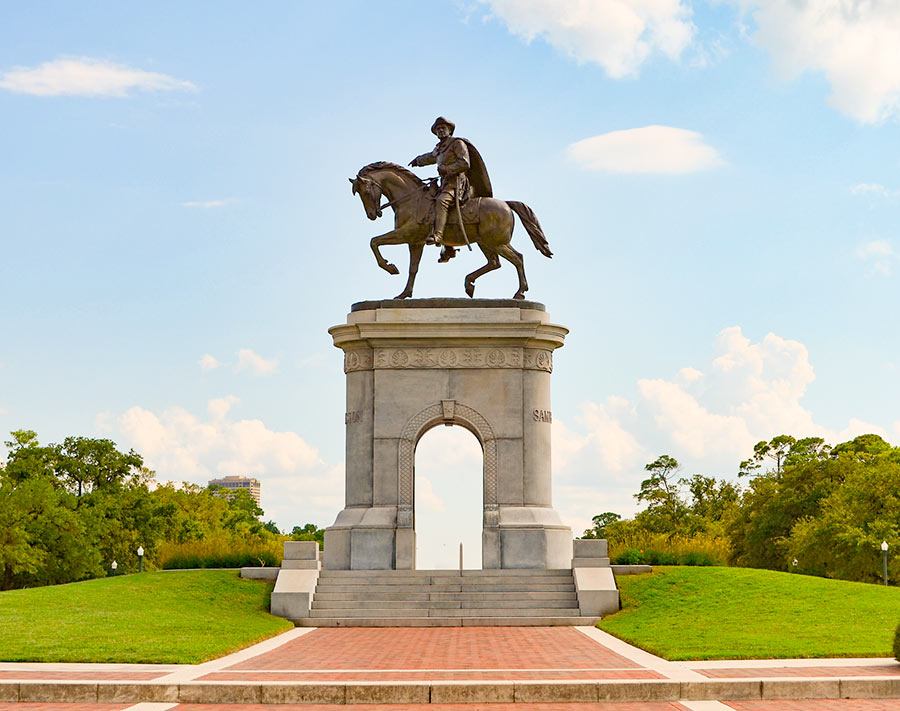 “Where, exactly, is the intersection of Sam Houston and ‘confederate history’?
March 16, 1861 — Sam Houston refuses to take the oath of the confederacy:
‘Fellow citizens, in the name of your rights and liberties, which I believe have been trampled upon, I refuse to take this oath. In the name of the nationality of Texas, which has been betrayed by the Convention, I refuse to take this oath. In the name of the Constitution of Texas, I refuse to take this oath. In the name of my own conscience and manhood, which this Convention would degrade by dragging me before it, to pander to the malice of my enemies . . . I refuse to take this oath.’†[Diaspora, commenting on Best Buy’s Houston Warehouse Hunt; Sunrun Comes To Town; Is That Your Mermaid House Floating in the Gulf?] Photo of Sam Houston statue at Hermann Park: elnina, via Swamplot Flickr pool
“Where, exactly, is the intersection of Sam Houston and ‘confederate history’?
March 16, 1861 — Sam Houston refuses to take the oath of the confederacy:
‘Fellow citizens, in the name of your rights and liberties, which I believe have been trampled upon, I refuse to take this oath. In the name of the nationality of Texas, which has been betrayed by the Convention, I refuse to take this oath. In the name of the Constitution of Texas, I refuse to take this oath. In the name of my own conscience and manhood, which this Convention would degrade by dragging me before it, to pander to the malice of my enemies . . . I refuse to take this oath.’†[Diaspora, commenting on Best Buy’s Houston Warehouse Hunt; Sunrun Comes To Town; Is That Your Mermaid House Floating in the Gulf?] Photo of Sam Houston statue at Hermann Park: elnina, via Swamplot Flickr pool

YOUR BEST SOURCE FOR WILLOWRIDGE HIGH MOLD INFESTATION UPDATES 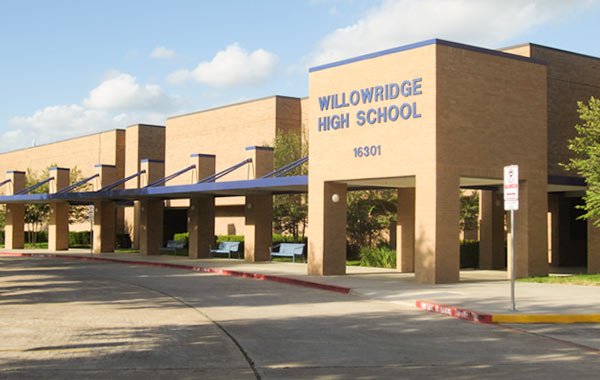 Curious about the extent of the mold found throughout Fort Bend ISD’s Willowridge High School this summer? Wondering if all the penicillium discovered on the campus at the tail end of Chimney Rock Rd. can be cleared out in time for the first day of school? As of today, there’s a new website for that: Check out this page for updates on remediation efforts; an accounting of band, JROTC, and athletic uniforms locked inside (they’ll be professionally cleaned); as well as a bit of backstory noting how investigators think the whole fungus fest began — after power was shut down in late June in advance of a planned construction project: “It is believed that the conditions outside (with increased humidity) combined with the fact that there was no A/C in the building factored into the rapid growth of the mold spores.” [Fort Bend ISD] Photo: Fort Bend ISD

RICHMOND MANNEQUIN MANSION NOW HAS A FAN PAGE, REGULAR DRIVE-BYS, AND LOOKY-LOOS, BUT NO BUYER YET 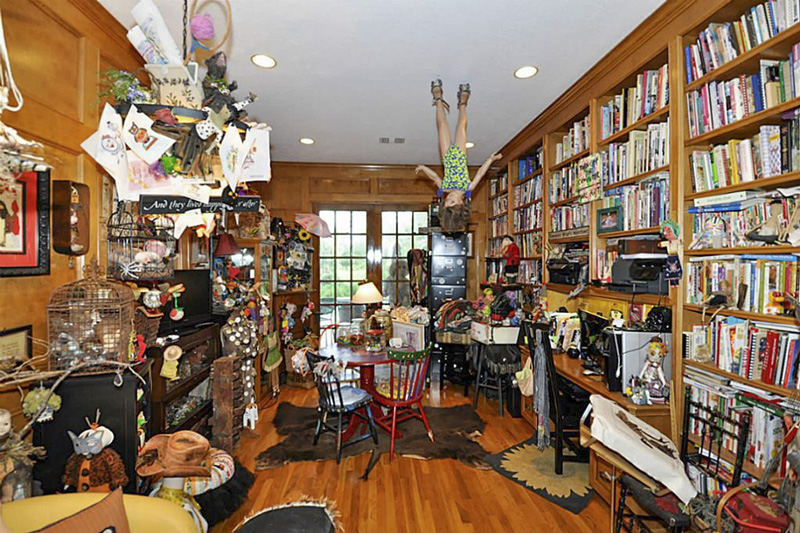 More than 3 million people have now viewed the listing for the 5-bedroom gated home at 4302 Colony West Dr. — a bit of an uptick from the 200 or so per week its real estate agent, Diana Power, says typically look up one of her less unusual home offerings. But this 2-acre property on Jones Creek has a bit more going on in its photos. Sandy Walsh, the Richmond jewelry and clothing designer and artist behind the tchochke-, mannequin-, and set-piece-stunt-filled 5-bedroom home, has now done 3 teevee interviews to show off her handiwork and stand up to viewer insults (“Don’t just hate it and think it’s creepy . . . take a second look.â€); she’s also started a Facebook fan page for the property, which she regularly populates with jarring closeups of its done-up mannequin residents. Law enforcement officers, writes Chronicle reporter Emily Foxhall, have been alerted to “the issue of curious people driving past” the home. “It requires time to take everything in,” Foxhall notes. “Some potential buyers have wanted the mannequins included,” Powers tells her, “but Walsh does not plan to part with them all.” The asking price remains at $1,275,000. [Houston Chronicle ($); previously on Swamplot] Photo of 4302 Colony West Dr.: HAR

COMMENT OF THE DAY: MIGHT UPSET HOUSTON’S DELICATE WATERWAY ECOSYSTEM  “. . . I suppose all those cars need to come out of the bayou, but I fear that will really mess up the fishing.” [Txcon, commenting on Comment of the Day: Aside from These 2 Issues, Fishing in Brays Bayou Is Enormously Appealing]

COMMENT OF THE DAY: ASIDE FROM THESE 2 ISSUES, FISHING IN BRAYS BAYOU IS ENORMOUSLY APPEALING 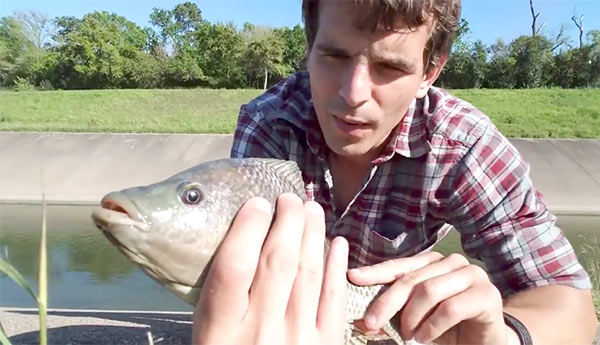 “The problem: I don’t think I would trust any of those fish to eat. Sure, you can catch and release, but I also don’t see the appeal of standing on the banks of a concrete ditch.” [Heightsresident, commenting on A Fishing Guide to Concrete-Lined Brays Bayou] Photo: Payton Moore

A FISHING GUIDE TO CONCRETE-LINED BRAYS BAYOU  What kind of fish can an enterprising angler find in the wilds of inner-loop Brays Bayou? Episcopal priest and urban fly-fishing evangelist Mark Marmon tells the Chronicle‘s Shannon Tompkins he’s caught 18 different species in Brays Bayou alone, including largemouth bass, crappie, catfish, sunfish, Rio Grande perch, longnose gar, spotted gar, and white bass. But that’s just counting the natives. The biggest draws — and what you’re most likely to find — are the alien invaders, which include mullet, the aquarium-fugitive armored catfish known as plecostomus, tilapia, and grass carp, aka “Bellaire bonefish.” But you’ve got to know where to look for them: “They, like most fish in the bayou, tend to cluster around the mouth of ‘feeder’ creeks,” Tompkins reports. “They also like structure anomalies that create accelerated current or breaks in the current; in Brays Bayou, these are created by breaks or buckles in the otherwise smooth concrete lining of the bayou or maybe an abandoned shopping cart that has found its way into the bayou. (Anglers call those shopping carts ‘Brays Bayou mangroves.’)” [Houston Chronicle] Photo: Payton Moore

BUFFALO BAYOU PARTNERSHIP NOW LOOKING EAST OF DOWNTOWN, MAKING PLANS 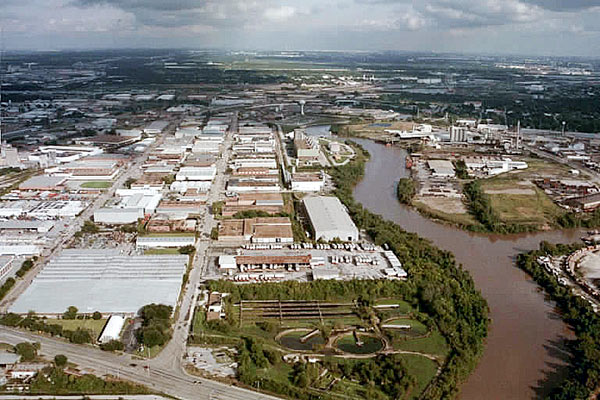 The landscape architecture firm that rejiggered the grounds of the Menil Collection and has put forward a new plan for Hermann Park will now be turning its attention to Buffalo Bayou east of Downtown, where the waterway widens ahead of the Houston Ship Channel and Galveston Bay. Michael Van Valkenburgh Associates will lead an effort to create a new master plan for the bayou’s “East Sector” — the section between Hwy. 59 and the Turning Basin — the Buffalo Bayou Partnership announced yesterday. Also on the team of consultants the nonprofit waterway overseers has selected to create the plan: the firm formerly known as Morris Architects, which a few months ago switched its name to that of its parent company, Huitt-Zollars. The partnership says it wants a plan that reflects the cultural and industrial background of the area, that will help connect surrounding neighborhoods to the bayou, and that creates green spaces that can help revitalize that part of Houston. [Buffalo Bayou Partnership] Photo: Buffalo Bayou Partnership

COMMENTS OF THE DAY: WHEN HOUSTON JEWELRY WRAPPED A SHINY BAND AROUND A COUPLE OF DOWNTOWN BUILDINGS AT 720 RUSK 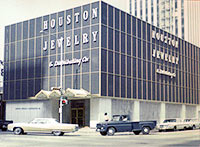 “We bought this building from Star Furniture in 1966 and operated in it until 1983 when we were offered a very generous price at the top of the market. After we left the building stayed empty until the Subway opened. . . . This is how the building looked when it was remodeled by architect Arnold Hendler in 1966.” [Rex Solomon, commenting on Downtown Houston Is Now Down To A Single Street-Level Subway] Photo: Houston Jewelry

EMPTY ‘END HUNGER’ WAREHOUSE BY I-45 NORTH TO BE FILLED WITH WORKERS MAKING SOUTH AFRICAN FOOD AND SEASONINGS 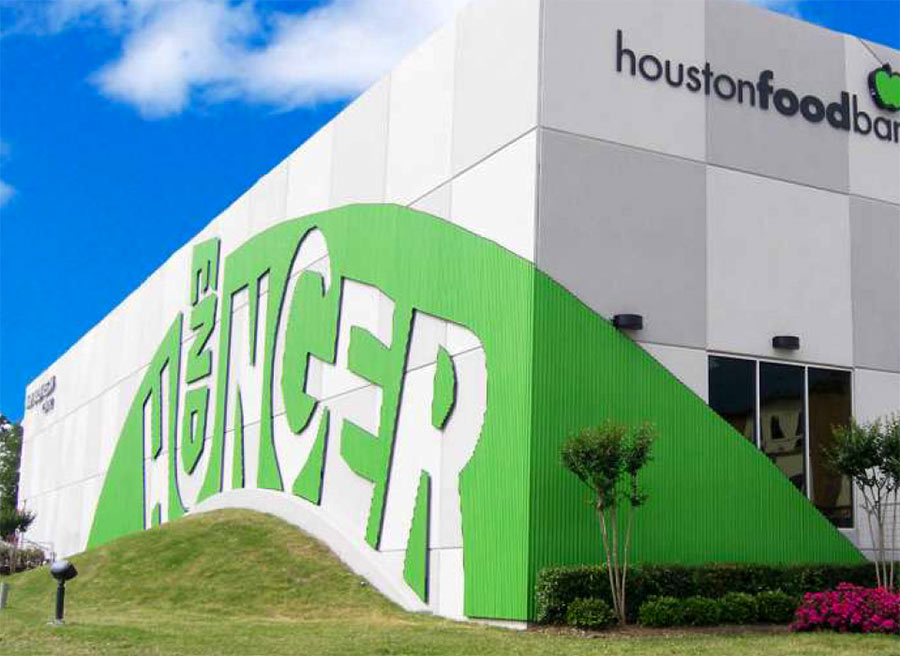 The former Mary Barden Keegan building at 2445 North Fwy. a couple of exits north of Downtown that for more than 10 years was home to the Houston Food Bank will soon make some adjustments to its culinary mission. The Peli Peli restaurant group has announced that the 15,000-sq.-ft. building — which includes a 9,362-sq.-ft. commercial kitchen as well as office and warehouse space — will henceforth become the food-preparation hub of the growing 5-restaurant chain’s Houston operations. The kitchen that once provided space for the creation of 5,000 meals a day for needy individuals will soon house Peli Peli’s catering operation and provide space for the production of Peli Peli–brand bottled sauces and spices. (“That includes piri piri pepper, also known as bird’s-eye chili, which is used to flavor chicken and seafood and to rim martini glasses,” notes the Chronicle‘s Katherine Feser.) Peli Peli partner Thomas Nguyen tells Feser the company plans to keep the building’s signature END HUNGER graphic embedded into the building’s tilt-up-concrete panels on its freeway side, which were originally painted red when the building was constructed in 2006 but are now rendered in green. “We’re not messing with it,” he tells her. “If anything, we would like to enhance it later on.” The Houston Food Bank sold the building to Virgata Property Company last year, leasing it back until it could complete construction of an even larger kitchen operation in the much larger facility it constructed out of  the former Sysco warehouse at 535 Portwall St. near I-10 and the West Loop. [Houston Chronicle; PR Newswire; previously on Swamplot] Photo: Virgata Property

SWEET MESQUITE REBIRTHING IN RAGIN’ CAJUN’S ABANDONED UNDERGROUND LAIR BELOW MAIN 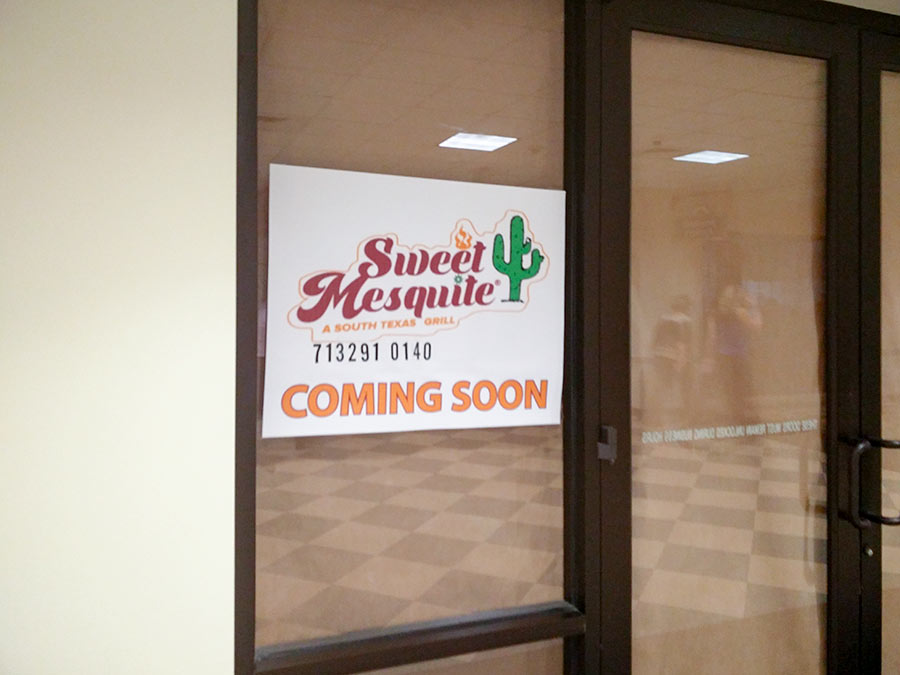 A sign advertising a new Sweet Mesquite Grill has appeared in the tunnel-facing storefront under the McKinney Place Garage where Ragin’ Cajun shut down a few months ago. The spot below 930 Main St. Downtown is scheduled to open in a month as a Sweet Mesquite do-over. The restaurant in the shopping center at 1570 S. Dairy Ashford near Briar Forest Dr. was a Sweet Mesquite Grill before it became Mesquite Cottage; the new tunnel location henceforth will be the only Sweet Mesquite Grill in town, but is expected to be a bit of a reboot from the original. [Previously on Swamplot] Photo: Swamplot inbox

COMMENT OF THE DAY: DOWNTOWN’S TUNNELS ARE THE SCENE 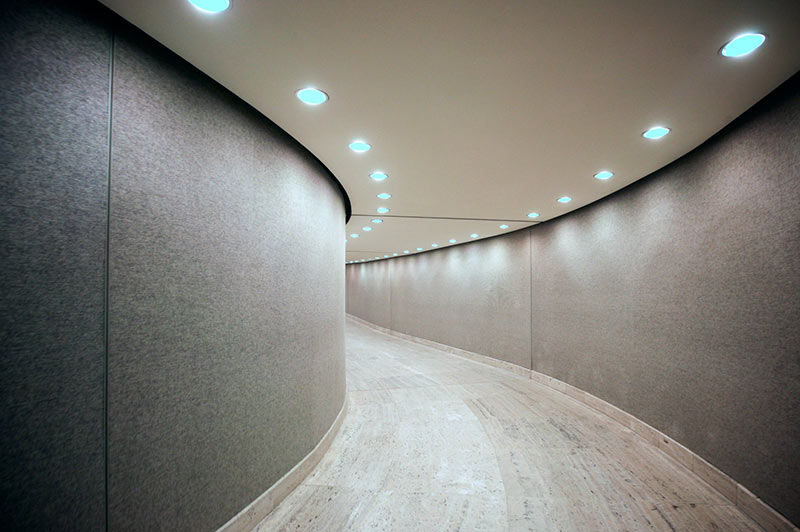 “As someone who uses the tunnels everyday, I contest that they are glorious. My sweatless armpits and rain-free coiffure are a testament thereto.” [Superdave, commenting on Downtown Houston Is Now Down To A Single Street-Level Subway] Photo: Ed Schipul [license]

DOWNTOWN HOUSTON IS NOW DOWN TO A SINGLE STREET-LEVEL SUBWAY 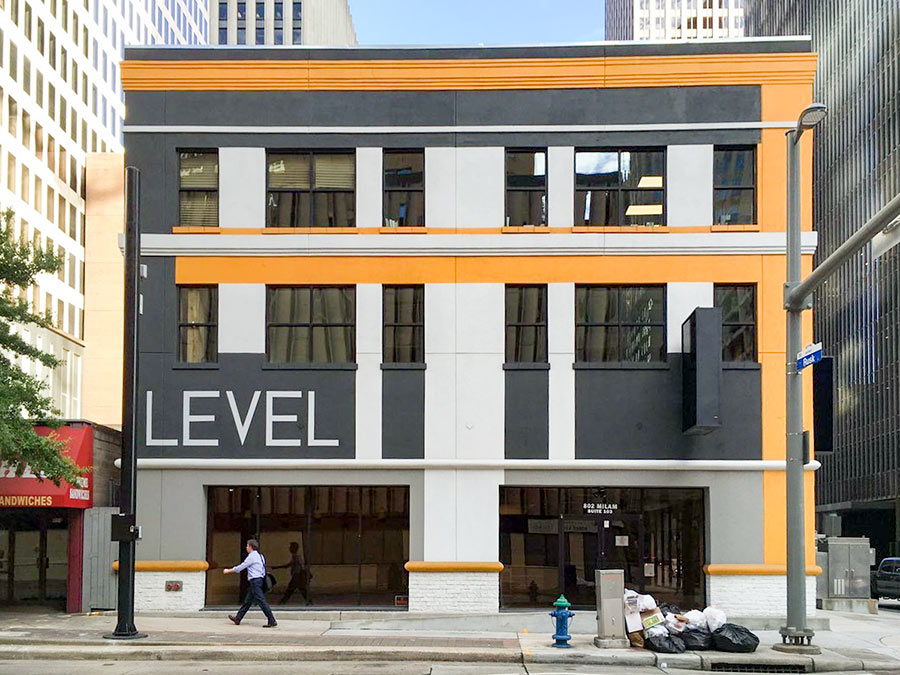 With the shuttering last week of the Subway sandwich shop at the corner of Milam and Rusk streets — catty corner from Pennzoil Place, in the ground-floor space below the Level Office at 720 Rusk St. (pictured here) — the national sandwich chain is now down to a single Downtown location that can be accessed from a sidewalk. Another streetside Subway, in the ground floor of the Americana Building 5 blocks to the south at the corner of Milam and Dallas, exited its space before demolition began on that structure in February. A total of 8 Subways are located Downtown, but they’re all now harbored in tunnels or lobbies or food courts — except the lone fresh-air holdout at 405 Main St., at the corner of Preston. [Previously on Swamplot] Photo of former Subway space at 802 Milam St.: cmoney_htx


